Why AI Memory Systems Are Just Copying the Human Brain — Layer by Layer
~8 min read · AI Memory · Neuroscience · Cognitive Science · RAG · AI Agents
Introduction: The 21st Century is the Era of Biology
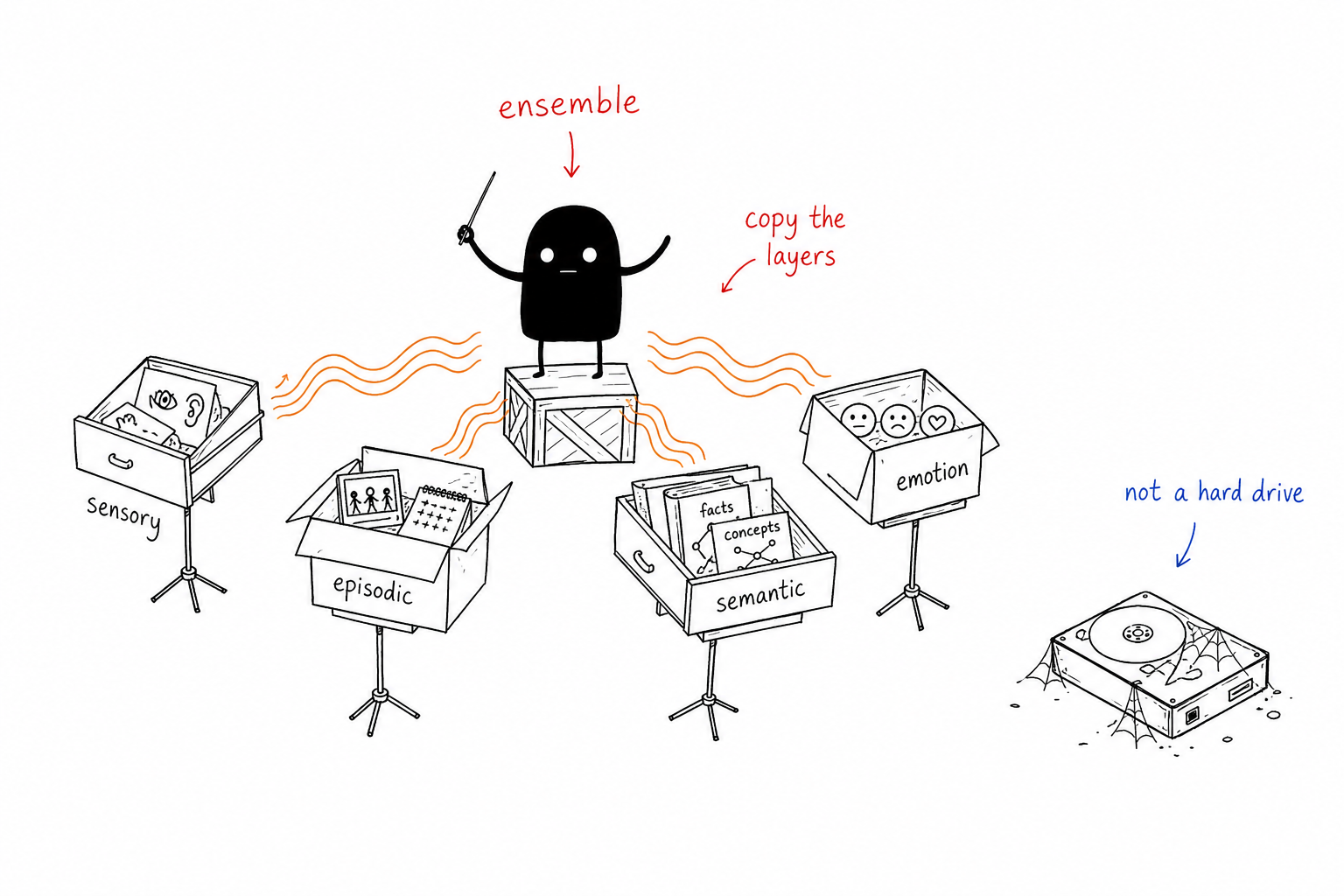
The 21st century is the era of biology. This isn’t a poet’s lament — it’s a growing consensus among AI researchers.
When we shift our gaze from “compute power” to “the human brain,” we realize that today’s most impressive AI Memory systems — from RAG to Claude Memory, from mem0 to character.ai — are all doing the same thing: replicating the human brain’s memory architecture, layer by layer.
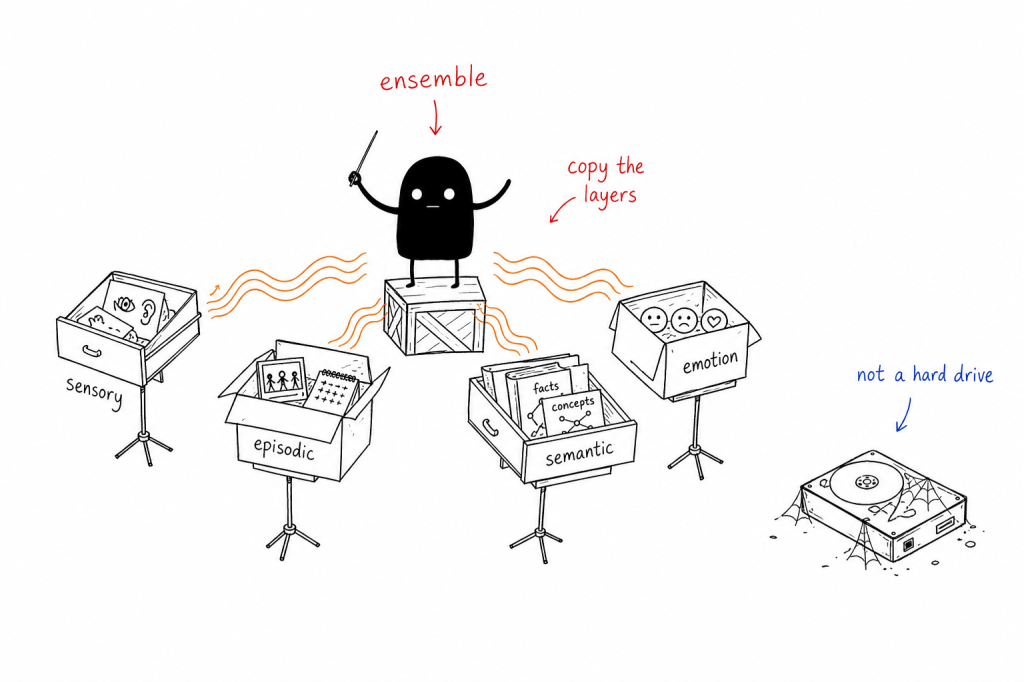
The human brain is not a hard drive. It’s an orchestra. Different brain regions handle different types of memory, working in concert so we can “remember what we read.” The core finding from 60 years of cognitive science: memory is not a single system, but a framework of multiple orthogonal dimensions — the same event can be remembered along completely independent axes.
💡 This article analyzes the human brain’s memory architecture layer by layer, starting from cognitive science’s layered memory models, and maps each layer to corresponding AI Memory system designs. Seven memory layers, seven categories of AI products — a complete blueprint of the “digital brain.”
The Layered Model of Memory: A Cognitive Science Perspective
In 1968, Atkinson and Shiffrin proposed the Multi-Store Model of memory: sensory memory → short-term memory → long-term memory, with information flowing through three gates like water through a lock. In 1972, Tulving further subdivided long-term memory into episodic memory (remembering what happened) and semantic memory (knowing what is), later adding procedural memory (knowing how to do).
Modern neuroscience has confirmed that these memory types are governed by different brain regions, each with independent encoding, storage, and retrieval mechanisms. This maps precisely onto different design directions for AI Memory systems.
The diagram below shows the 7-layer memory architecture, from sensory to procedural, from milliseconds to permanent:
L0["🔍 L0 Sensory Memory\nSensory Cortex (Occipital/Temporal)\n---\nMilliseconds | Massive capacity\nAI: OCR · VLM · ASR"]L1["💬 L1 Short-term Memory\nDLPFC (Prefrontal Cortex)\n---\nSeconds–Minutes | 7±2 chunks\nAI: Context Window · Session Memory"]L2["🧩 L2 Working Memory\nPFC + Parietal Lobe\n---\nMinutes–Hours | Active processing\nAI: LLM Reasoning · CoT/ToT"]L3["🧠 L3 Episodic Memory\nHippocampus\n---\nDays–Years | Event encoding\nAI: RAG · Claude Memory · ChatGPT Memory"]L4["📚 L4 Semantic Memory\nTemporal Cortex\n---\nYears–Permanent | Concept network\nAI: Pinecone · Supabase · Chroma"]L5["❤️ L5 Emotional Memory\nAmygdala\n---\nPermanent | Emotional tags\nAI: character.ai · replika · Kin.ai"]L6["⚙️ L6 Procedural Memory\nBasal Ganglia / Cerebellum\n---\nPermanent | Skill automation\nAI: Agent Skills · Workflows · Letta"]
These seven layers are not isolated — information flows from sensory memory, gets actively processed by working memory, is encoded as episodic memory by the hippocampus, gradually consolidates into semantic knowledge in the temporal lobe, gets tagged with emotional labels by the amygdala, and ultimately forms automated skills through the basal ganglia and cerebellum. Each layer corresponds to a distinct design direction for AI Memory systems.
Layer-by-Layer Analysis: From Sensory to Procedural
L0 Sensory Memory — The Gateway of Information
Definition: Sensory memory is the frontmost station of the memory system, encompassing both visual (iconic, ~0.5 seconds) and auditory (echoic, ~3–4 seconds) registers. It has massive capacity but decays almost instantly — only attended information proceeds to the next layer.
Corresponding Brain Region: The occipital visual cortex handles visual sensory memory — recognizing letter shapes, line spacing, and layout. The temporal auditory cortex handles auditory sensory memory.
AI Correspondence: This is the AI system’s data acquisition and perception layer. OCR engines convert images to text, VLMs (Vision Language Models) understand layout structure, and ASR converts speech to text. Without this layer, AI is “blind” and “deaf.”
Representative Products: VLM (Qwen-VL, GPT-4V), TextIn xParse (document layout analysis), Whisper (speech recognition).
👁️ Insight: The “attention filter” mechanism of sensory memory corresponds to “information preprocessing and quality screening” in AI — not all input is worth remembering. The key is filtering for valuable information.
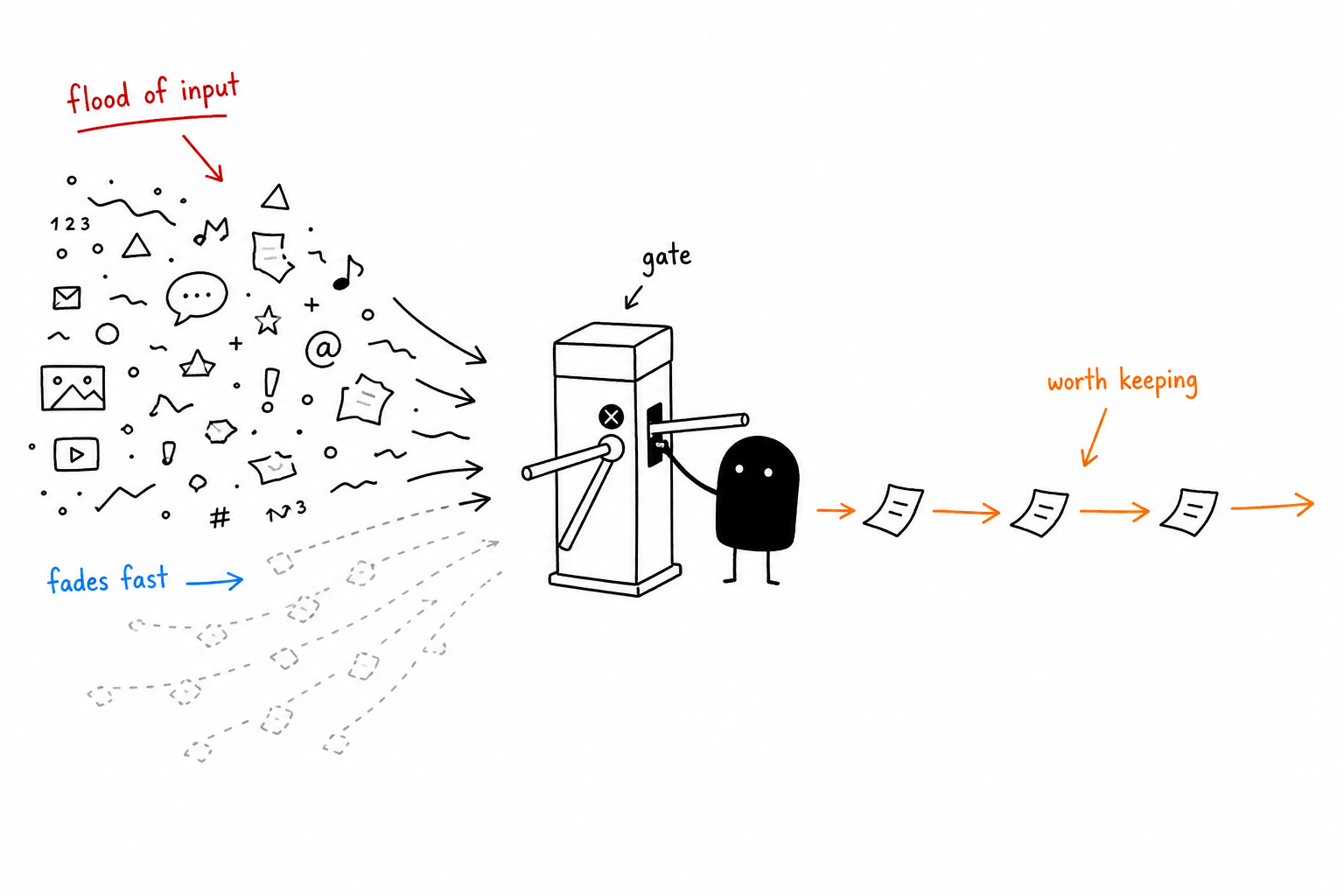
L1 Short-term Memory — Instant Cache
Definition: Short-term memory retains information for about 15–30 seconds with limited capacity (Miller’s “7±2” rule). It’s the most basic “online” memory, involving no deep processing.
Corresponding Brain Region: The dorsolateral prefrontal cortex (DLPFC) is the core region for short-term memory, responsible for temporarily holding and manipulating information.
AI Correspondence: This is the LLM’s context window. All tokens from the current conversation live here; once the window closes, the information vanishes. GPT-4’s 128K window and Claude’s 200K window are essentially expanding “short-term memory” capacity.
Representative Products: Context Window across LLMs, Session Memory (conversation-level cache).
💬 Insight: The capacity limit of short-term memory (7±2) corresponds to the token limit of context windows. The human brain breaks through via “chunking”; AI breaks through via RAG and external memory.
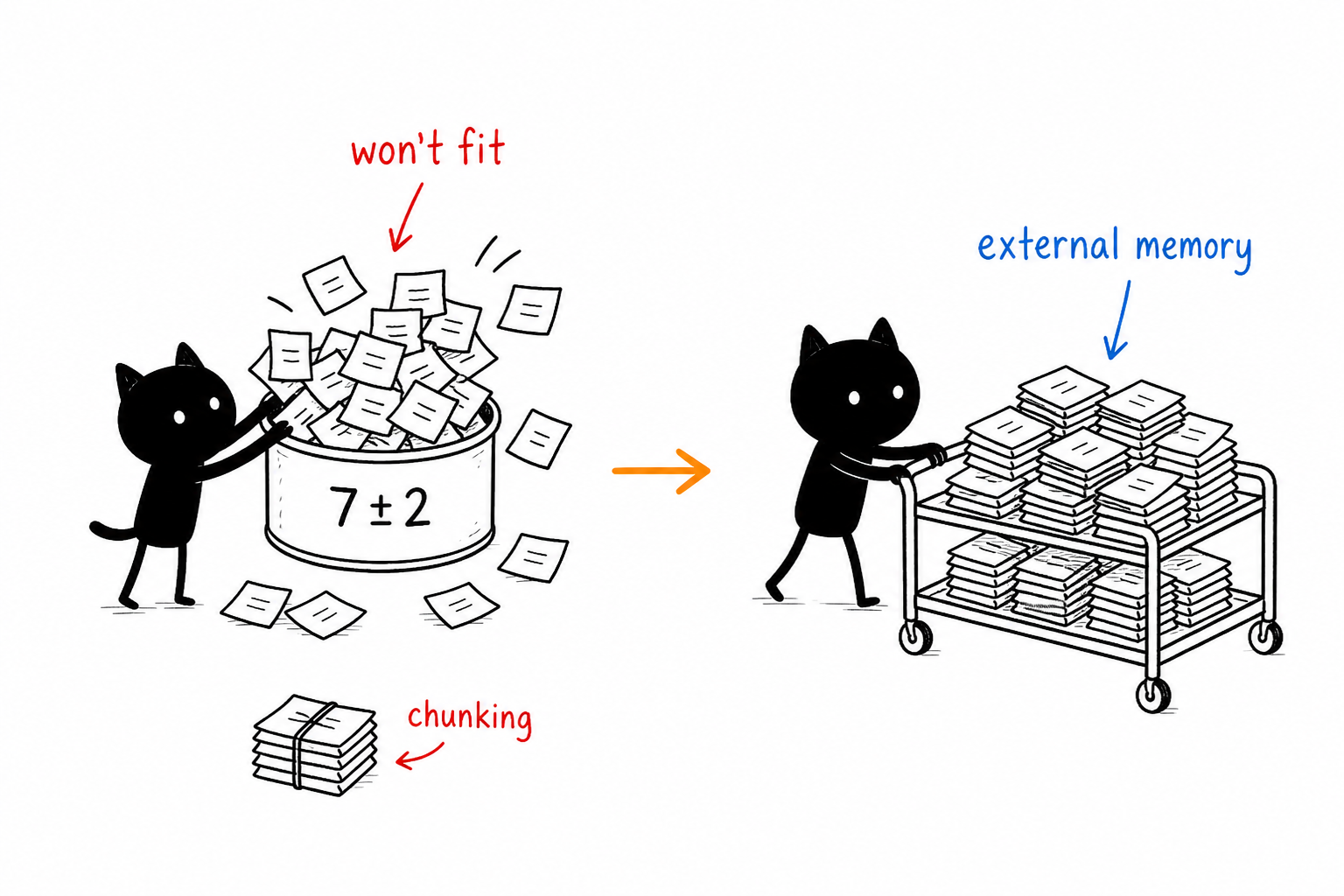
L2 Working Memory — Active Processing
Definition: Working memory is the upgraded version of short-term memory — not just passively holding, but actively processing, reasoning, and integrating. Baddeley’s model divides it into the central executive, phonological loop, and visuospatial sketchpad.
Corresponding Brain Region: The collaborative network of the prefrontal cortex (PFC) and parietal lobe. The PFC handles executive control and reasoning; the parietal lobe handles information integration.
AI Correspondence: This is the LLM’s reasoning and working memory layer. Chain-of-Thought (CoT), Tree-of-Thoughts, and other reasoning frameworks are essentially simulating the “active processing” of working memory. Mem0 and Zep enable AI to maintain reasoning context across multi-turn conversations through structured memory management.
Representative Products: LLM Reasoning (CoT/ToT), Mem0, Zep, Letta/MemGPT.
🧩 Insight: The key feature of working memory is the “central executive” — deciding what to attend to and what to ignore. AI’s “attention mechanism” is precisely a mathematical simulation of this function.
L3 Episodic Memory — Encoding Events
Definition: Episodic memory is “remembering what happened” — event memory tied to specific times, places, and contexts. It’s autobiographical, carrying spatiotemporal tags.
Corresponding Brain Region: The hippocampus is the core of episodic memory. It integrates scattered perceptual information into unified event memories and connects new knowledge with old. Patients with hippocampal damage cannot form new episodic memories (as in the famous case of patient H.M.).
AI Correspondence: This is AI’s event memory and index construction layer. RAG systems encode information into retrievable event memories through chunking, embedding, entity recognition, and relation extraction. Claude Memory and ChatGPT Memory let AI remember “what we talked about before,” while mem0 provides an open-source memory management framework.
Representative Products: RAG systems, Claude Memory, ChatGPT Memory, mem0.
🧠 Insight: The hippocampus is not just a “storage device” but an “indexer” — it builds associations, not copies. Vector indices and knowledge graphs in RAG are the engineering implementation of this function.
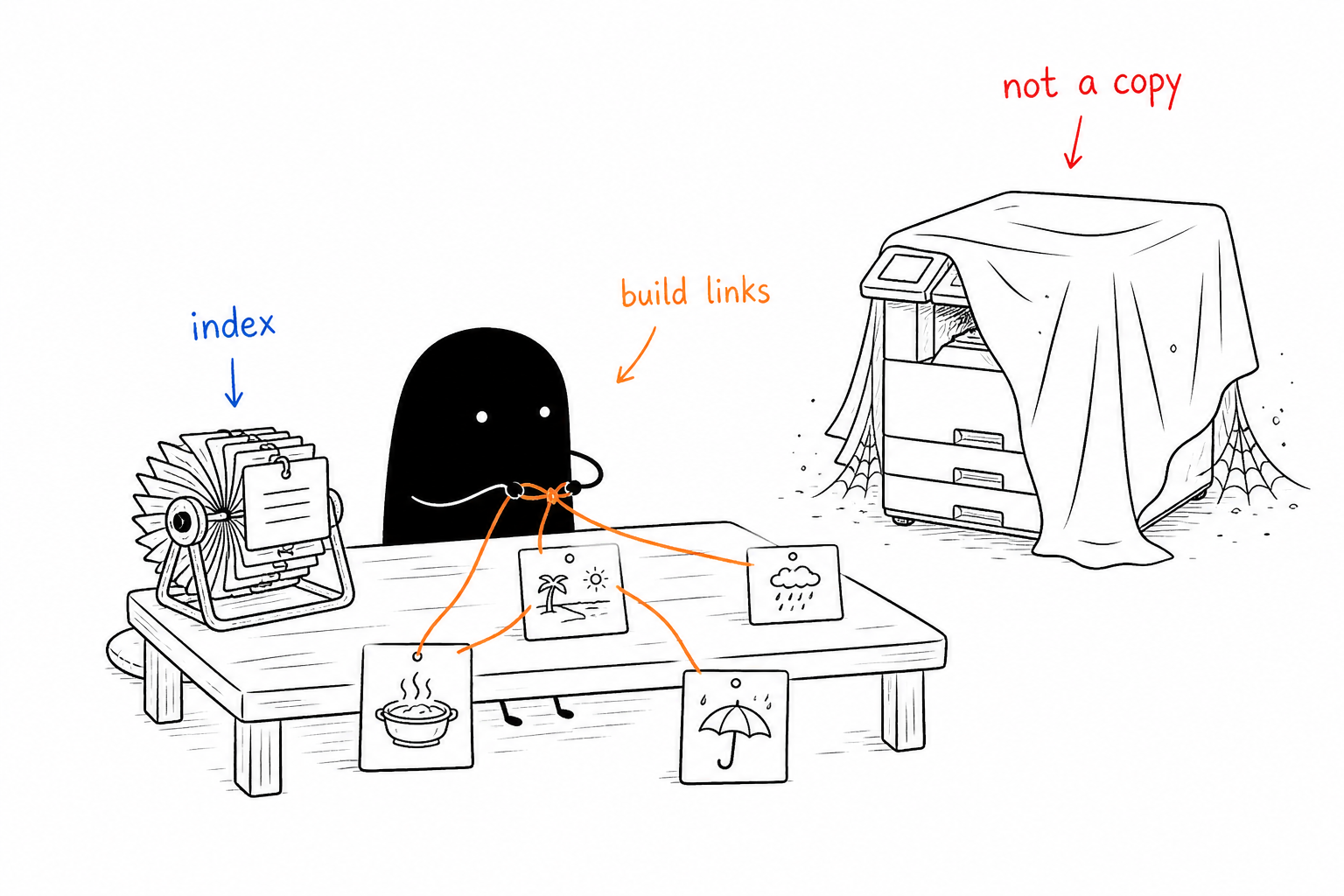
L4 Semantic Memory — Consolidation of Concepts
Definition: Semantic memory is “knowing what is” — concepts, facts, definitions, and world knowledge detached from specific contexts. It doesn’t depend on “when or where it was learned” and is stable and durable.
Corresponding Brain Region: The temporal cortex. As memory consolidates, episodic memories gradually lose their situational context and are stored long-term across broad neocortical association areas. The hippocampus plays the role of “relay station” in this process.
AI Correspondence: This is AI’s long-term knowledge layer. Vector databases (Pinecone, Chroma, Weaviate) store semantic embeddings, knowledge graphs store conceptual relationships, and structured note bases store facts. These systems give AI “cross-conversation, cross-session” stable knowledge.
Representative Products: Pinecone, Supabase, Chroma, Weaviate, knowledge graphs (Neo4j).
📚 Insight: The brain’s “memory consolidation” process — from hippocampus-dependent to neocortex-independent storage — corresponds to AI’s architectural evolution from RAG short-term caching to vector database long-term storage.
L5 Emotional Memory — Tagging Value
Definition: Emotional memory isn’t an independent memory type but rather emotional labels attached to other memories. The amygdala tags events with “like/dislike/fear” labels, and emotional intensity directly affects memory durability.
Corresponding Brain Region: The amygdala. It works closely with the hippocampus — the hippocampus encodes event content, while the amygdala encodes the emotional significance of events. Emotionally intense events (“flashbulb memories”) are often remembered better than mundane ones.
AI Correspondence: This is AI’s emotional and preference layer. Emotional tagging systems assign “like/dislike” weights to content, and recommendation systems adjust content priority accordingly. Consumer-facing AI companion products give AI “emotional memory” — remembering users’ emotional states and preferences.
Representative Products: character.ai, replika.ai, Kin.ai.
❤️ Insight: “We don’t remember events themselves, but how we felt about them.” Emotional memory is the most neglected layer in current AI Memory systems — yet it’s the key to personalized experiences.
L6 Procedural Memory — Automation of Skills
Definition: Procedural memory is “knowing how to do” — automated skills like riding a bicycle, typing, or speed reading. It requires no conscious involvement and, once acquired, is remarkably resistant to forgetting.
Corresponding Brain Region: The basal ganglia handles habit and skill learning, while the cerebellum handles fine motor skill calibration. Together they automate repeatedly practiced actions.
AI Correspondence: This is AI’s skill and workflow layer. Agent Skills encapsulate common operations into reusable skill modules, and Workflows define automated processes. Letta/MemGPT teaches AI “how to use memory” through memory management — which is itself a form of procedural memory.
Representative Products: Agent Skills (e.g., WorkBuddy SkillHub), Workflows (Zapier/n8n), Letta/MemGPT.
⚙️ Insight: The core of procedural memory is “automation” — from requiring consciousness to operating without it. AI Agent “skillification” is taking the same path: from prompt instructions to packaged skills, from manual invocation to automatic triggering.
“Reading a Book” Full Flow: 7-Layer Synergy
Let’s use the scenario of “reading a book” to trace the collaborative process across all seven memory layers:
flowchart LR
    L0["L0 Sensory\nEyes recognize text\nLayout perception"] --> L1["L1 Short-term\nBuffer paragraph\n7±2 chunks"]
    L1 --> L2["L2 Working\nReason: 'What does\nthe author mean?'"]
    L2 --> L3["L3 Episodic\nEncode chapter events\nBuild associations"]
    L3 --> L4["L4 Semantic\nConsolidate concepts\nBuild knowledge network"]
    L4 --> L5["L5 Emotional\nTag: 'This moved me'\nWeight by feeling"]
    L5 --> L6["L6 Procedural\nAutomate reading skill\nRead faster over time"]
When you open a book, the entire process launches in milliseconds:
- L0 Sensory Memory: The occipital visual cortex recognizes letter shapes and layout — you “see” the text
- L1 Short-term Memory: The prefrontal cortex temporarily holds the current paragraph — you “read” the content
- L2 Working Memory: The PFC + parietal lobe reasons about “what the author means” — you “understand” the meaning
- L3 Episodic Memory: The hippocampus encodes this moment as an event — you “remember” the plot
- L4 Semantic Memory: The temporal lobe consolidates concepts into long-term knowledge — you “master” the ideas
- L5 Emotional Memory: The amygdala tags the moving passages — you “fall in love” with the book
- L6 Procedural Memory: The basal ganglia automates the reading behavior — you “read faster and faster”
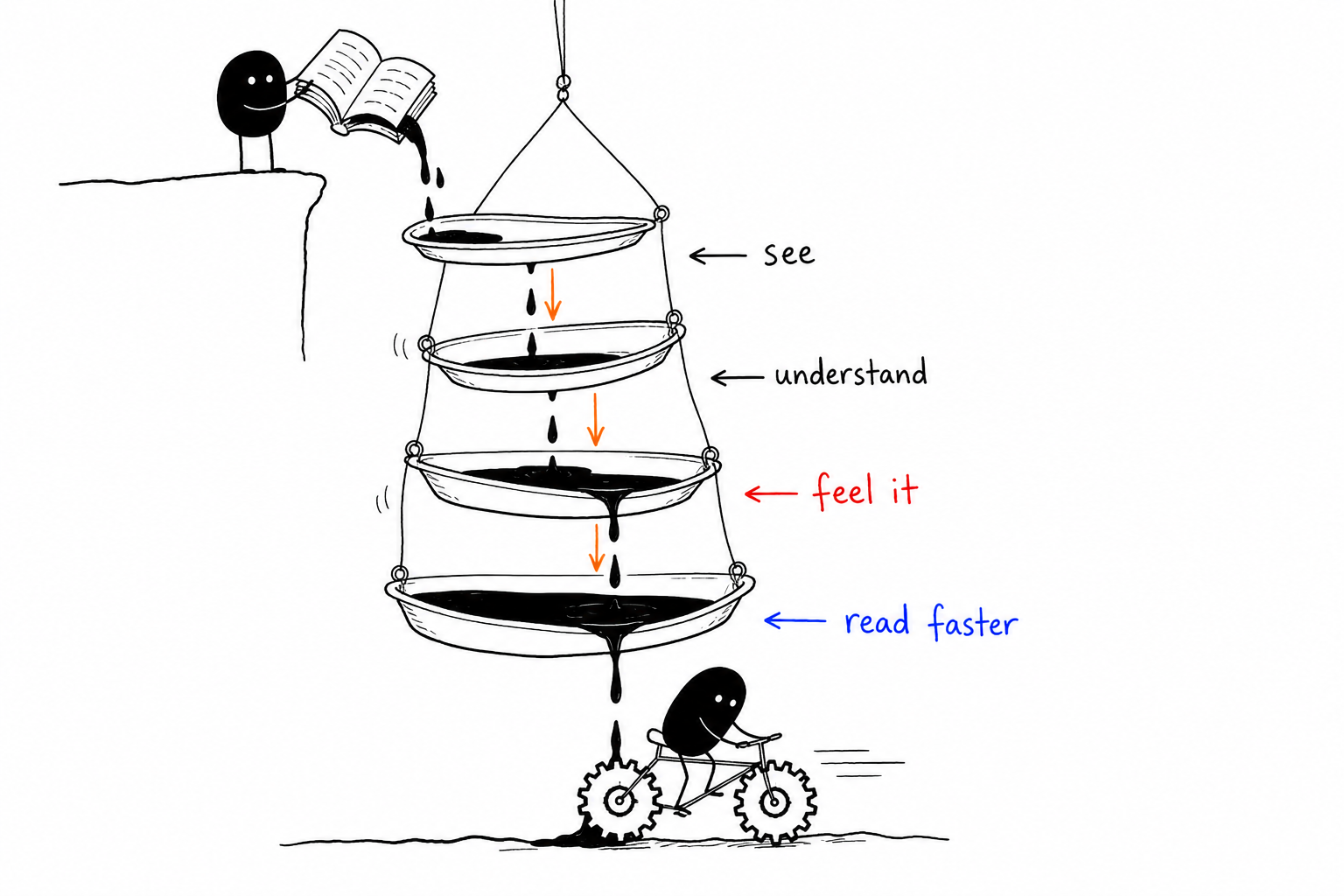
Each layer “copies” the previous layer’s work while providing material for the next. This isn’t a linear pipeline but a multi-layered, cascading, repeatedly consolidated dynamic system.
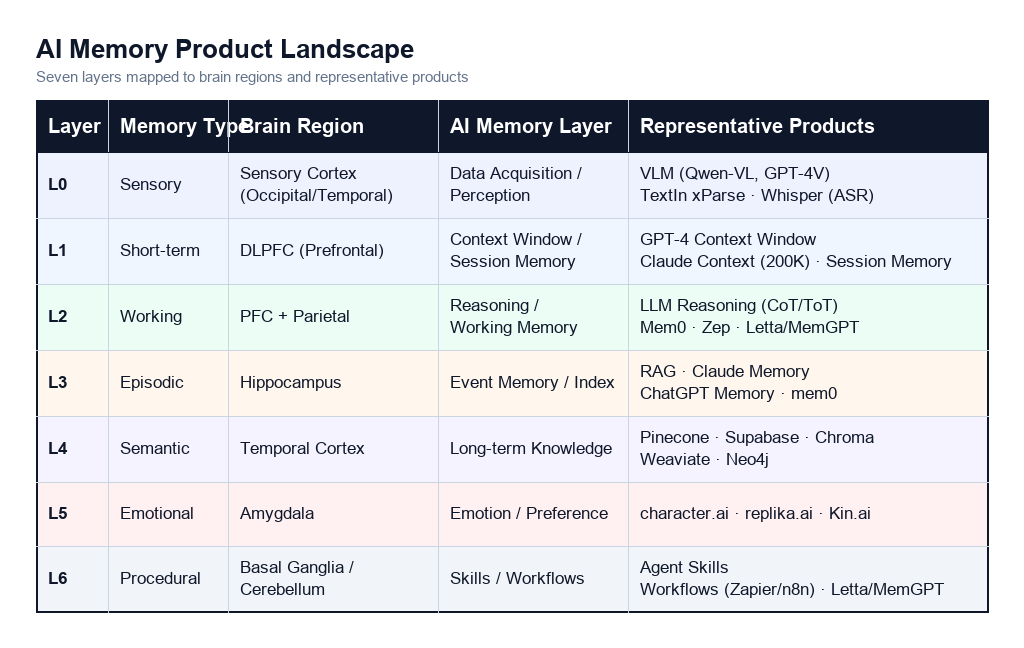
AI Memory Product Landscape
The following table summarizes the AI product ecosystem mapped to the 7-layer memory architecture:
Human Brain vs AI: Differences and Insights
Brain Region Map
Since Mermaid doesn’t handle spatial diagrams well, here’s a tabular guide to the 7 memory regions in the human brain:
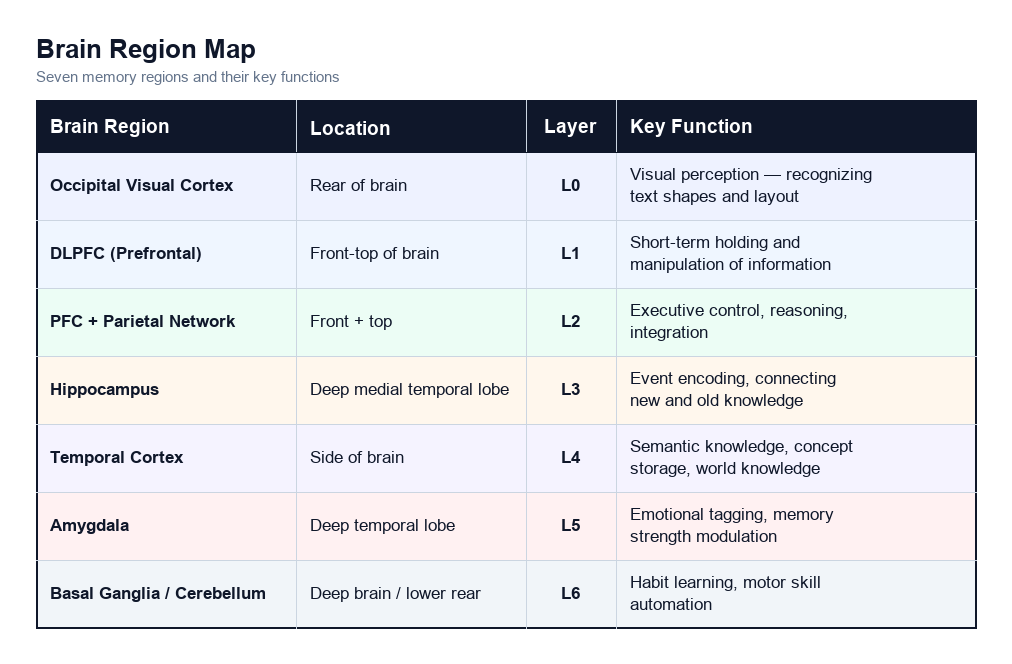
Flow: L0 Sensory → L1 Short-term → L2 Working → L3 Episodic → L4 Semantic → L5 Emotional → L6 Procedural
Human Brain Advantages
- Imagination & Creativity: AI is pre-trained on existing knowledge; the human brain can generate novel connections and ideas on top of existing memories
- Cross-modal Association: The brain’s seven memory layers are deeply coupled — visual, linguistic, emotional, and motor naturally fuse; AI layers are often isolated modules
- Forgetting Mechanism: The brain actively forgets irrelevant information to optimize retrieval efficiency; AI’s “store everything” approach degrades retrieval quality
- Emotion-driven: Emotional intensity determines memory strength — the brain “remembers what moved it”; AI hasn’t effectively leveraged this mechanism
AI Advantages
- Infinite Capacity: Vector databases can store billions of memories; the brain’s long-term memory capacity is ~10¹⁵ bytes
- Precise Retrieval: Semantic search can locate any memory fragment in milliseconds; the brain’s retrieval often depends on cues and state
- Multi-copy Consistency: The same memory can sync across multiple AI instances; brain memories are exclusive
- Editability: AI memories can be corrected, deleted, rewritten; traumatic brain memories are hard to erase
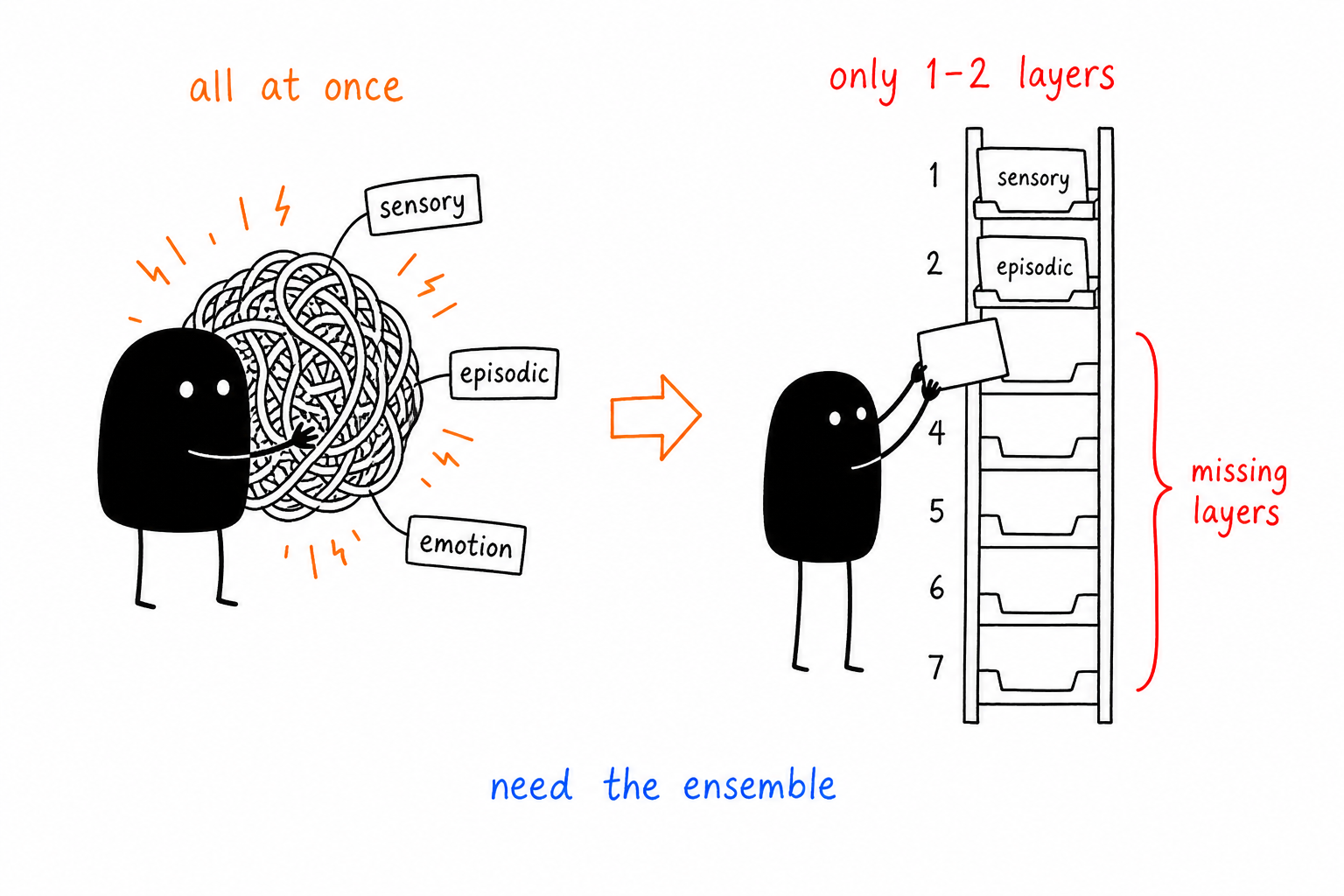
🎯 Key Difference: The brain’s seven memory layers are deeply coupled — when reading a moving passage, visual (L0), comprehension (L2), event (L3), knowledge (L4), and emotion (L5) all activate simultaneously. Most current AI Memory products cover only 1–2 layers. The future “digital brain” needs all seven layers in concert, not single-point breakthroughs.
Conclusion: The 21st Century is the Era of Biology
The 21st century is the era of biology — the true meaning of this phrase is not that biology replaces AI, but that AI learns from biology.
From the Atkinson-Shiffrin memory model of 1968 to today’s Pinecone vector databases; from patient H.M. revealing hippocampal function to RAG system index construction; from the amygdala’s emotional tags to character.ai’s emotional companionship — every breakthrough in AI Memory has been “copying the brain’s homework.”
But the human brain has one advantage AI cannot yet break through: imagination. AI is pre-trained, based on existing knowledge; the human brain can generate entirely new connections and ideas on top of memory. This may be the most profound footnote to “the 21st century is the era of biology” —
The end of AI memory is the human brain.
This article’s 7-layer memory model is based on classical cognitive science theories (Atkinson-Shiffrin Multi-Store Model, Tulving’s Episodic-Semantic Distinction, Baddeley’s Working Memory Model) and a cross-analysis with the current AI Memory product ecosystem. Brain region mappings are based on classical neuroscience research; AI product classifications are based on 2024–2025 market observations.
#AIMemory #Neuroscience #CognitiveScience #RAG #AIAgents #SecondBrain #MemorySystems #LLM
 Blog
Blog 
Leave a comment