Many teams already use LLMs for document Q&A and summarization. Once they move toward production-level agents or enterprise RAG systems, however, document parsing starts to define the ceiling. As the saying goes, agents are only as good as the context they are given.
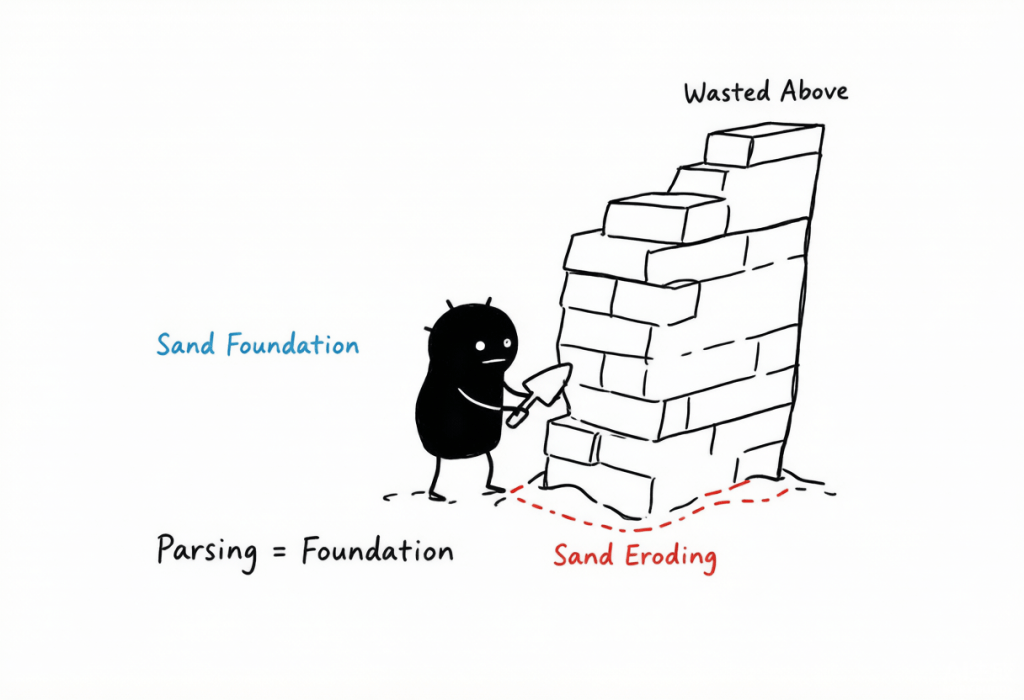
Across many industries, the context an agent needs is locked inside files: financial statements, prospectuses, earnings calls, research papers, and experimental reports. If parsing scrambles the original structure, retrieval, reasoning, and decision-making are built on sand. Using an LLM alone to parse long documents is time-consuming and token-intensive.. That’s why we need specialized parsing tools for long-document processing.
This guide compares the document-parsing approaches and practices of Reducto, LlamaIndex, Unstructured.io, MinerU, and Knowhere. Its goal is to help different teams choose the right tool combination across the chain of document → context → agent.
1. What This Guide Helps You Decide
Document parsing is often treated as a technical detail that only backend developers need to care about. In today’s ecosystem, it has become shared ground for agentic document platforms, developer-first RAG frameworks, and data-preprocessing infrastructure.
This article is particularly relevant for:
- Agent and RAG application developers who care about parsing quality, chunk schemas, and token cost. Every extra piece of “junk context” adds another layer of noise to an agent’s reasoning.
- Financial, research, and healthcare teams that need to parse high-value documents such as academic papers, financial reports, and medical records. These teams often have strict requirements around traceability and compliance.
- Independent developers and creators building reusable knowledge assets for desktop agents and personal AI applications. They care about cost, control, and whether content parsed once can be reused by their agents many times.
From a product-observer perspective, this guide aims to answer two questions:
- Among Reducto, LlamaIndex, Unstructured.io, MinerU, and Knowhere, what kind of PDF parsing tool best fits a team’s real use case?
- Across the spectrum from enterprise agentic platforms to personal desktop agents, when is a single product sufficient, and when does a team need a pipeline plus several specialized tools?
2. Understand Your Documents and Agent Jobs
Many RAG projects fail because the team has not clearly defined the documents it owns or the work its agent is expected to perform. A stronger model alone rarely fixes that.
Document Types and Sources
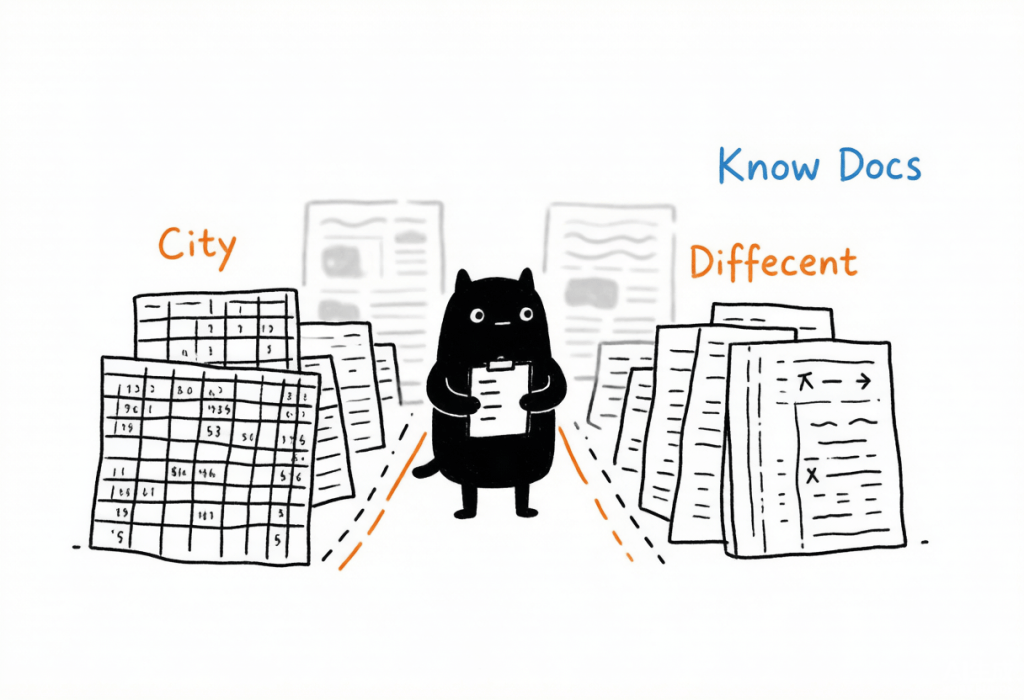
Unstructured.io’s breakdown of LLM ingestion offers a useful picture: real-world documents resemble a city of records. PDFs, PowerPoint decks, Word files, HTML pages, scanned documents, tables, and images all occupy the same neighborhood, yet their structures and noise levels vary wildly.
In finance, a public LlamaIndex session pointed out that the details that truly determine risk in credit memos, audited financials, and credit agreements are often nested tables, footnoted adjustments, and covenant grids. If those structures get flattened during parsing, even a very capable agent has little meaningful material left to work with.
Public product examples reveal several common document families:
- Financial documents: annual reports, 10-Ks, 10-Qs, credit memos, loan agreements, and structured-finance disclosures. They are dense with tables, complex footnotes, and cross-page structure.
- Scientific and technical documents: multi-column papers, technical reports containing formulas and charts, and experimental data logs. These often have complicated layouts and extensive cross-references.
- Healthcare and public-sector documents: scanned medical records, form-based records, and government PDFs. Images and low-resolution scans are common, and formats vary widely.
- Enterprise knowledge bases: internal policies, operating manuals, project reports, exported emails, and meeting notes. Their formats are mixed and their contents change frequently.
- Creative and literary texts: classic novels, world-building bibles, and game-design documents. These need rich structure around characters, locations, events, and timelines.
These documents also arrive from many sources: core business systems, email attachments, cloud file servers, historical scans, and photographed PDFs. Before choosing a PDF parser for an agent, a team should identify its file types and sources, then design a full document pipeline: Connect → Transform → Clean → Chunk → Embed → Connect. A one-off parse is rarely the whole job.
Agent Jobs and Error Cost
LlamaIndex has noted that naive top-k retrieval is often enough for straightforward Q&A. Complex work requires an agent to select retrieval modes and data sources based on the question itself. Otherwise, it is easy to fetch the wrong context.
Across published articles and product examples, agent tasks generally fall into three categories:
- Retrieval-first: Research assistants and knowledge-based bots need to find the right passage and attach a reliable citation. Parsing quality functions like map accuracy: the farther off the map, the worse the navigation.
- Decision-support: In finance, healthcare, and compliance workflows, an agent does more than answer questions. It must make a pass/fail judgment from extracted fields and rules. Reducto, for example, presents a workflow of “schema-driven extraction + policy checking + page-level citation.”
- Workflow agents: In enterprise settings, agents may create tickets, update systems, or send notifications. Their parsed output must be structured enough to flow directly into downstream systems. If the structure is unstable, it is like asking a robot to walk across a crooked floorboard: mistakes become much more likely.
The cost of error ranges from a tolerable inconvenience to an unacceptable compliance incident. In personal knowledge management, a few incorrect fields may cost someone a few extra minutes. In medical or regulated contexts, an incorrect field can introduce legal or regulatory risk.
Andrew Ng made a similar point when introducing Unstructured’s course: preprocessing is critical to effective RAG because it directly affects retrieval accuracy and a model’s ability to understand its source material. It is also a layer many teams overlook.
Once these differences are clear, teams finally have a ruler for choosing a PDF parser.
3. Evaluation Framework for PDF Parser APIs
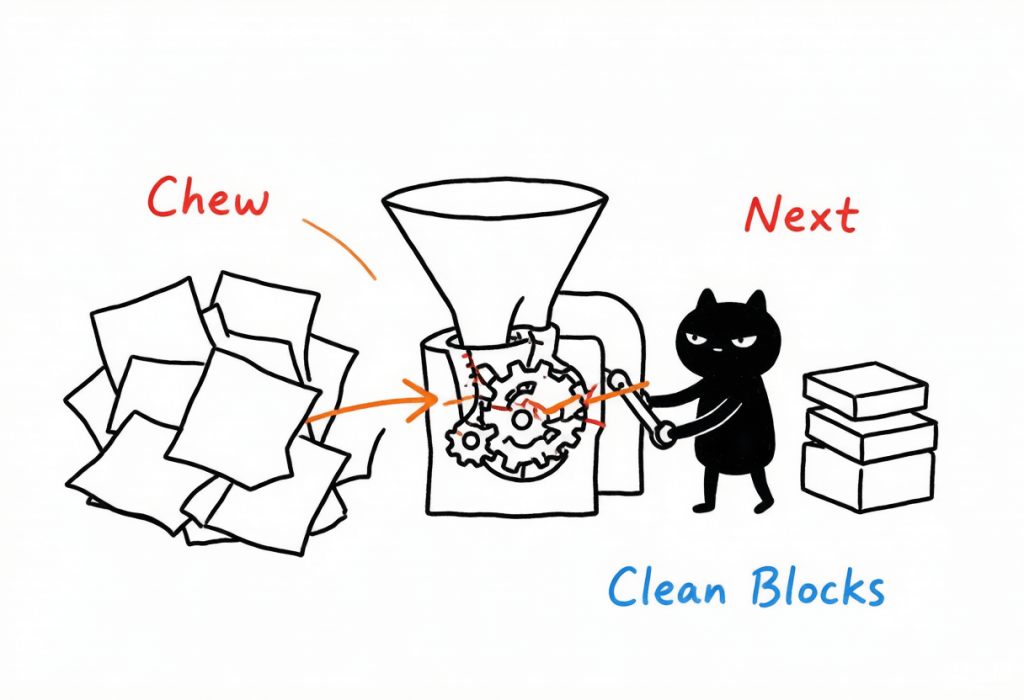
The full document → context → agent chain can be compared to a digestive system. Document parsing is the mouth and stomach, where material is chewed and initially processed. RAG retrieval is the small intestine, absorbing what is useful. LLM reasoning is the circulatory system, delivering it where it needs to go. If the mouth and stomach do a poor job, expensive downstream organs will struggle to compensate.
Core Criteria
- Document fidelity: For complex PDFs such as research papers and financial reports, can the parser preserve layout, structure, and meaning? This is especially important for multi-column pages, tables, and footnote-heavy documents. It is the first test of a parser’s upper bound.
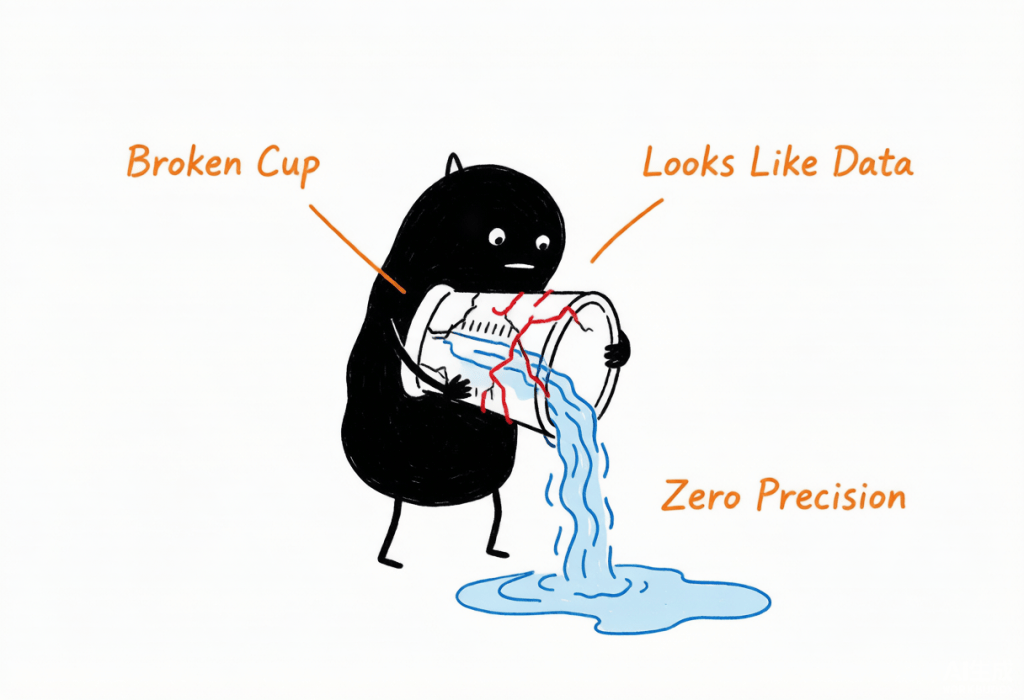
- Tables and formulas: In finance and research, a broken table is like measuring water with a shattered measuring cup: there may still be numbers, yet precision has left the building. A parser must handle cross-page headers, units, currencies, and formula representations.
- OCR and multimodal capability: Open-source engines such as MinerU invest heavily in VLM + OCR, making them better suited to image-based PDFs, multiple languages, and complex layouts. Unstructured treats OCR as part of a broader preprocessing pipeline.
- Output structure: LlamaParse leans toward parsing content for use within its own RAG pipeline. Unstructured produces general-purpose JSON. Knowhere explicitly produces RAG-ready chunks and structured JSON schemas that can be connected to a range of RAG or agent frameworks.
- Traceability and confidence: In financial and compliance use cases, many teams increasingly expect page-level citations, per-field confidence, and review queues. Black-box extraction alone is rarely sufficient. Knowhere’s newer page-based parsing follows this direction.
- Scale, reliability, and governance: Reducto emphasizes “hundreds of millions of pages per day” and enterprise SLAs, capabilities that matter most to mid-sized and large organizations. Unstructured offers VPC and bare-metal deployment options, with more emphasis on governance and data sovereignty.
- Cost structure: Reducto, LlamaParse, and Unstructured Cloud use credit-based or per-page pricing. MinerU, as an open-source option, moves much of the bill into GPU usage, storage, and engineering time. Knowhere supports both API-based credit usage and local deployment through its open-source repository. Its competitive case centers on total cost, including reduced downstream RAG token consumption.
Technical Approaches
Several technical approaches recur across these products:
- Plain-text extraction: A lighter toolchain that remains useful for clean, text-heavy contracts, though it is limited with multi-column papers and complex tables.
- Layout-aware parsing: Reconstructing visual layout into a structural tree is essential for financial reports and scientific papers. It is a capability repeatedly emphasized in Knowhere’s GitHub README.
- OCR-first pipelines: Unavoidable when working with large numbers of scans and legacy documents. MinerU and several commercial platforms have invested heavily here.
- Agentic extraction: Reducto’s Deep Extract and LlamaIndex’s agentic retrieval point to a broader shift. Parsing and retrieval are becoming dynamic processes, where an LLM selects strategies and performs multi-step reasoning over complex tables and multiple data sources.
- Hybrid pipelines: Unstructured, LlamaIndex, and Reducto all describe enterprise document workflows as combinations of Connect → Transform → Clean → Chunk → Embed → Route, rather than a single tool operating alone.
4. Tool Landscape at a Glance
Taken together, these five products are better understood as five role archetypes than as entries in a simple leaderboard.
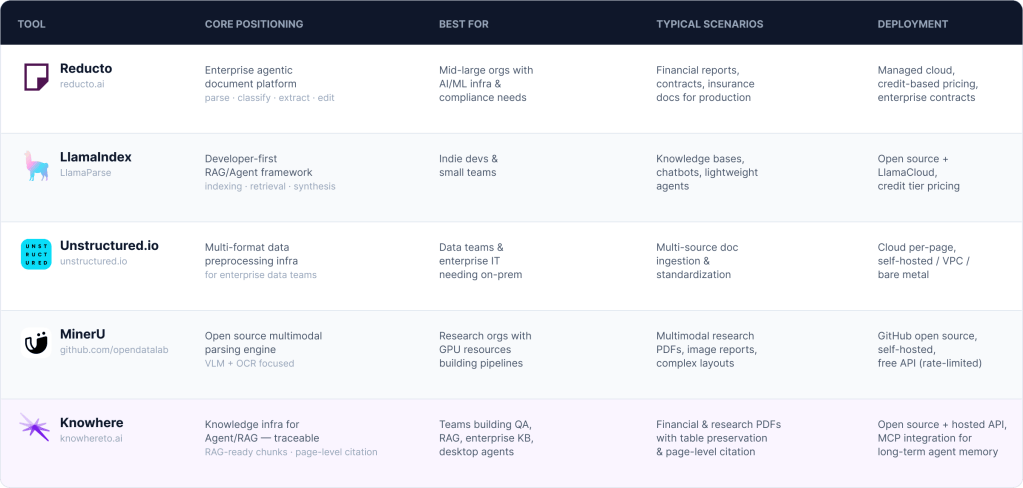
This comparison also reveals an important point: in mature agent architectures, these products are not always mutually exclusive. An enterprise might use open-source Knowhere to build a general preprocessing pipeline, LlamaIndex for RAG and tool orchestration, and MinerU to improve accuracy for particular languages or unusually complex layouts.
5. Scenario-Based Recommendations: Which Tool When
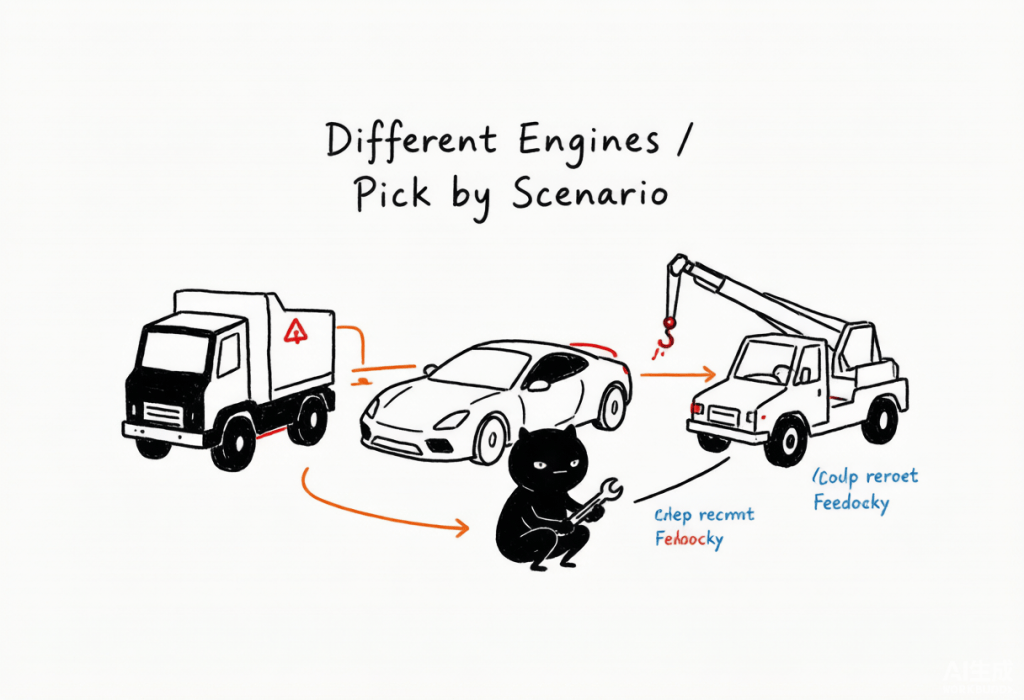
Placed in real industry scenarios, these products resemble different kinds of engines. Some are built for hauling freight, some for speed, and some for construction work. Comparing them on one track produces a misleading race.
Scientific Papers and Research Archives
Research teams often want to converse with a paper, not simply receive a summary. That requires an agent to locate sections, formulas, and charts precisely, while preserving logic across pages:
- multi-column layouts and reading order;
- citation relationships among formulas, figures, and body text;
- structured extraction from experimental tables and results sections.
MinerU’s multimodal and layout capabilities appeal to research groups that want deep control over models and parsing behavior. Teams that need to quickly build a RAG assistant and iterate on retrieval strategies may find LlamaIndex’s agentic retrieval mode well suited as the framework layer. For teams that need structured output, high-quality RAG-ready chunks, and transparent, traceable retrieval results, Knowhere’s document-structure-aware and page-based parsing can serve as a dedicated ingestion layer for academic PDFs.
Financial Statements and Annual Reports
Financial services is a document-centric industry. The details that drive decisions are usually hidden in report tables and complicated cross-references.
- For banks, private-equity firms, or asset managers that already have mature AI infrastructure, Reducto’s positioning as an “agentic document platform for leading AI teams” fits large-scale processing of financial reports, contracts, and credit memos. Its Deep Extract, schema-driven extraction, and per-field confidence mechanisms are designed to provide auditable context for enterprise agents.
- Knowhere can sit in a high-value PDF lane, specializing in structured chunking and citation for annual reports and research reports. This helps reduce context noise and manual cross-checking time for downstream agents.
Medical and Other High-Compliance Documents
Parsing in healthcare and government often resembles deciphering old archives: low-resolution scans and handwritten material are common, while privacy, access control, and compliance requirements remain high.
In these settings, self-hosting and private-cloud deployment are frequently baseline requirements. The open-source nature of Knowhere and MinerU therefore becomes important. Once structured fields are extracted, confidence scoring and human review provide a second filter. Knowhere, or another parsing layer that can return page- or chunk-level results, can support doctor-in-the-loop or compliance-in-the-loop workflows. It enables Q&A and search interfaces where clinicians or reviewers can verify the original evidence behind a particular field.
Enterprise Knowledge Bases and Internal Search
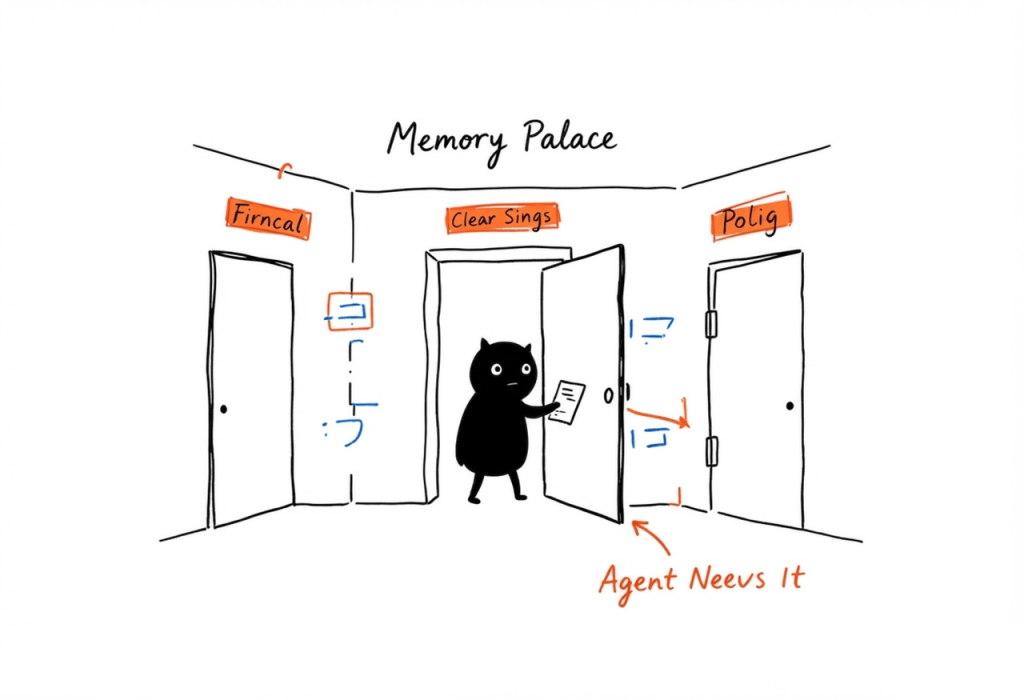
An enterprise knowledge base can be imagined as a company’s memory palace. Its rooms contain PDFs, slide decks, HTML pages, emails, and tickets. For an agent to move freely through it, the entrances and signposts need to be designed well.
- Unstructured can serve as the entrance hall: it receives raw documents from many sources and normalizes them into JSON.
- LlamaIndex functions as the guide system: through composite retrievers and router query engines, it combines multiple indexes and retrieval modes into a sensible search path.
- Knowhere converts complex PDF reports into hierarchical, page-cited chunks. It is like assigning financial and technical reports their own well-organized rooms, so an agent can enter when needed and leave with reliable citations. This lowers token waste and explanation cost in downstream retrieval and Q&A.
Personal and Desktop Agents, Creative Projects
The rise of desktop agents has encouraged many nontraditional developers to build their own AI applications. Some create interactive games from classic novels; others turn personal PDF libraries into local knowledge assistants.
These users usually face three problems:
- They need clearly parsed character systems and story settings that preserve the original structure.
- They do not want to keep dropping an entire PDF into the context window for every conversation.
- They want to manage knowledge assets locally or within an environment they control.
In this context, LlamaIndex’s agentic workflows can help developers quickly build a personal knowledge assistant by connecting local files, websites, and SaaS data through nodes and tools. Knowhere’s MCP or document-parsing API can serve as parse once, reuse many times personal knowledge infrastructure. It converts novels, notes, and reports into structured knowledge, stores and manages it in the cloud, and lets a desktop agent retrieve only what it needs. The result is lower token usage and less repeated context stuffing.
6. How to Test and Decide
Teams that make steady progress with document parsing and RAG tend to share several habits during evaluation.
Build a Shared Evaluation Set
They do not rely solely on vendor demos. Instead, they build an evaluation set from their own research documents, financial reports, medical records, contracts, and literary files:
- Include clean PDFs as well as scanned documents.
- Cover multi-column papers, cross-page tables, footnote-heavy pages, and long documents.
- Define clear examples of successful output and acceptable error ranges for each scenario.
This kind of evaluation set can compare Reducto, LlamaParse, Unstructured, MinerU, and Knowhere, while also revealing the difference between a self-built pipeline and a hosted API.
Measure Downstream Impact, Not Just Parsing Accuracy
The more useful metrics go beyond “field extraction accuracy”:
- Retrieval hit rate and whether an agent’s answer can be verified.
- Human review time per document.
- Token consumption and total cost.
- Failure patterns and the cost of repairing them.
The Reducto and LlamaIndex examples often demonstrate a full path from ingestion to decision, rather than stopping at parsing in isolation. This perspective is more valuable when evaluating agentic workflows.
Choose a Platform or a Combinational Stack
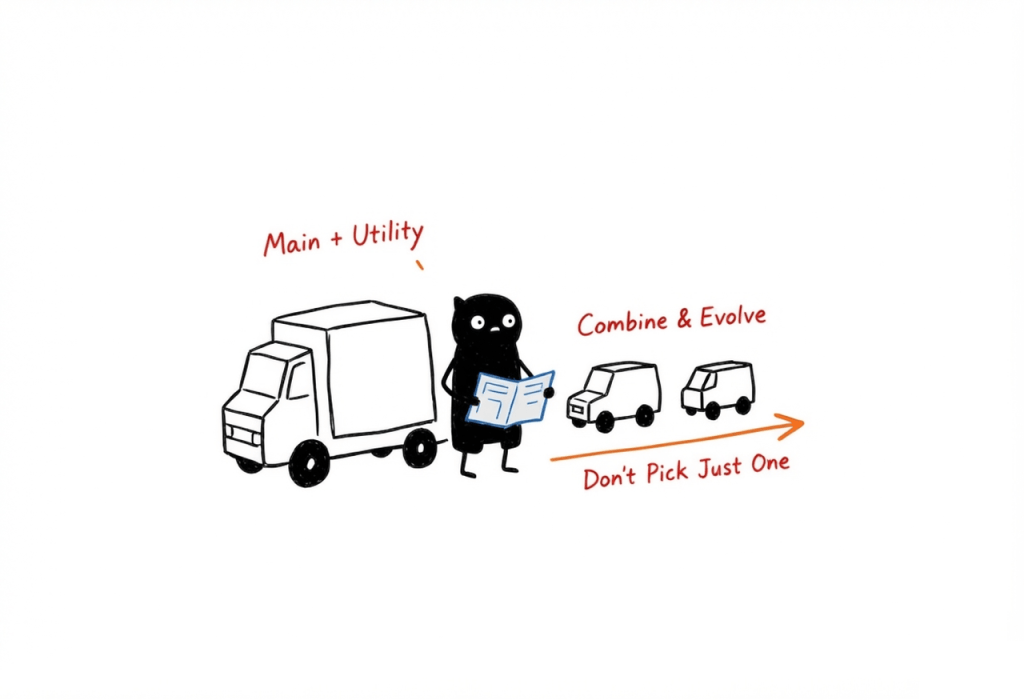
Over the long term, document-parsing selection is closer to choosing an evolution path than choosing a single feature.
- Organizations with mature AI platforms and substantial compliance requirements may be better served by building around Reducto or Unstructured, then using Knowhere or other parsing APIs for specific document families. Think of it as choosing a primary freight truck, then adding smaller specialist vehicles to the fleet.
- Developer-driven teams with varied use cases may benefit from a framework such as LlamaIndex, then attach Knowhere, MinerU, and other parsing capabilities where each is most appropriate.
- Knowhere can also become context infrastructure for desktop agents and personal knowledge management.
Returning to the opening line, agents are only as good as the context they are given: document parsing is the entrance, yet pipeline design, tool selection, and coordination across roles determine how far an agent can ultimately go. This guide offers a way to decompose the problem by scenario and combine tools by role, so teams at different stages and scales can choose document-parsing infrastructure that fits their RAG and agent applications.
 Blog
Blog 
Leave a comment