How I went from a 20% success rate to 90% accuracy by solving the “Structure Gap” in AI workflows.

As the owner of a small visa consultancy, I’ve spent months trying to integrate AI into our operations. My goal was simple: automate the repetitive stuff — organizing client files, filling out visa forms, and cross-checking data.
But after endless testing, I was ready to give up. In a real-world work environment, today’s Large Language Models (LLMs) often feel like silver-tongued amateurs. They talk a big game, but when it’s time to deliver, they drop the ball and offer a polite “I’m sorry” as if that fixes the mess they just made.
For example, last month I asked a model to analyze a family’s eligibility based on several reports. It gave me a great breakdown for the father, but completely “forgot” the mother and son. When I asked it to fill out an application form, it either failed to recognize the fields or filled them with total nonsense.
I was frustrated and felt like my “Pro” subscriptions were a waste of money.
The Breakthrough: Value vs. Structure
Everything changed when I stumbled upon a technical deep-dive in an AI community.
The article pointed out a core weakness: LLMs are far better at understanding “Values” than they are at understanding “Structure and Location”.
If you give an AI a 500-word story, it’s brilliant. It can summarize and narrate perfectly. But professional documents aren’t stories. They are complex, multi-layered hierarchies. Imagine a financial report with 8 chapters, 24 sections, 68 sub-points, 32 images, and 10 nested tables. To an AI, that’s a structural nightmare. It usually just “hallucinates” a summary based on the first two sentences and ignores the rest.
Then there’s the Context Window issue. Just because a model _can_ hold a million words doesn’t mean it _understands_ them. As the document length grows, the model’s focus drifts. It reads the beginning, forgets the middle, and makes up the end.
The “Scissors Gap” (SCD)
This isn’t just a “bad model” problem; it’s a fundamental architecture problem. Even the most advanced models — like DeepSeek-V3 or R1 — suffer from what researchers call the SCD (Scissors Gap).
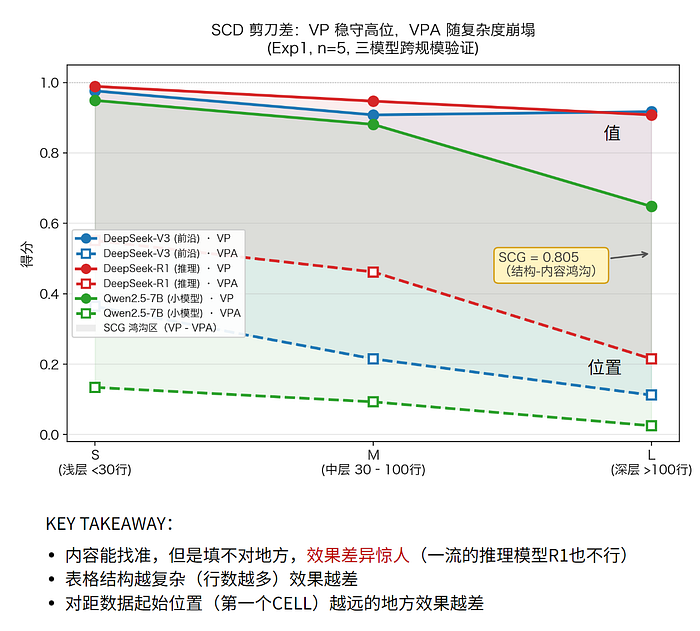
_Key Takeaway from the Data:_
>
>
_The Accuracy Collapse:__As table structure becomes more complex (more rows), accuracy doesn’t just dip — it collapses._
>
>
_The Location Bias:__The further a data point is from the starting cell, the more likely the AI is to get it wrong._
>
>
_The “Next Token” Trap:__LLMs are built for “Next Token Prediction”. They read linearly, not structurally. They aren’t designed to “see” layers or hierarchies._
The Solution: Don’t Wait for the AI to Get Smarter
I realized I couldn’t wait for the models to “evolve” their way out of this. I also couldn’t afford a massive enterprise software overhaul.
I reached out to the author of that deep-dive, and they recommended a tool that changed everything. My success rate for form-filling jumped from 20% to 90% almost overnight.
How? By adding a “brain” for document structure.
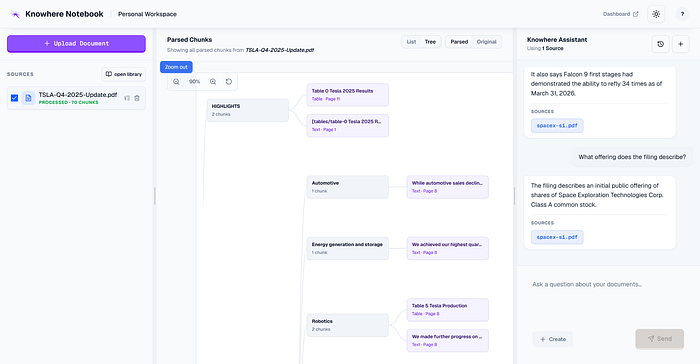
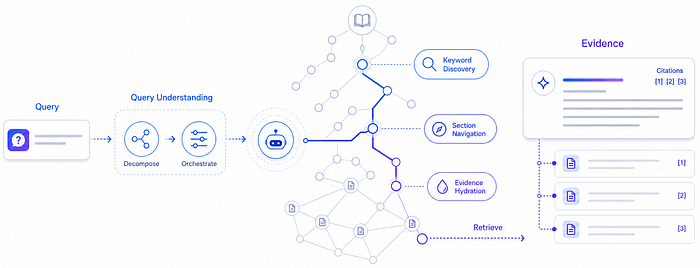
The tool, SnapFill, uses a specialized file parser called Knowhere. Instead of dumping a massive file into the AI and hoping for the best, it does the following:
- Segmented Parsing: It identifies and breaks down independent chapters, feeding them to the LLM in “digestible” batches to prevent cognitive overload.
- Structural Mapping: It recognizes continuous data blocks (like “Work Experience” or “Education History”) and separates them so the AI doesn’t mix up the details.
- User Profiling: It uses context to intelligently decide which fields need filling and which don’t, drastically increasing precision.
The Result: Doing More with Less
For a standard user info sheet with about 200 fields, the AI now finishes in one minute. That’s 5–6 times faster than before, and it saves a massive amount on Token costs.
Most importantly, it’s accurate. I no longer have to manually convert file formats or “hand-hold” the AI through every step.
By automating the “grunt work” of document processing, I’ve been able to focus on what actually grows my business: client relationships and high-touch service. Just the other day, a client told me we were the fastest and most professional agency they’d ever worked with. They asked if my team was “grinding” 24/7.
I just smiled and told them: “No, we just found the secret to making AI actually work.”
If you’re struggling with LLM hallucinations in your workflow, give SnapFill a look. It’s the missing piece of the puzzle.
Originally published on Medium.
 Blog
Blog 